Introduction
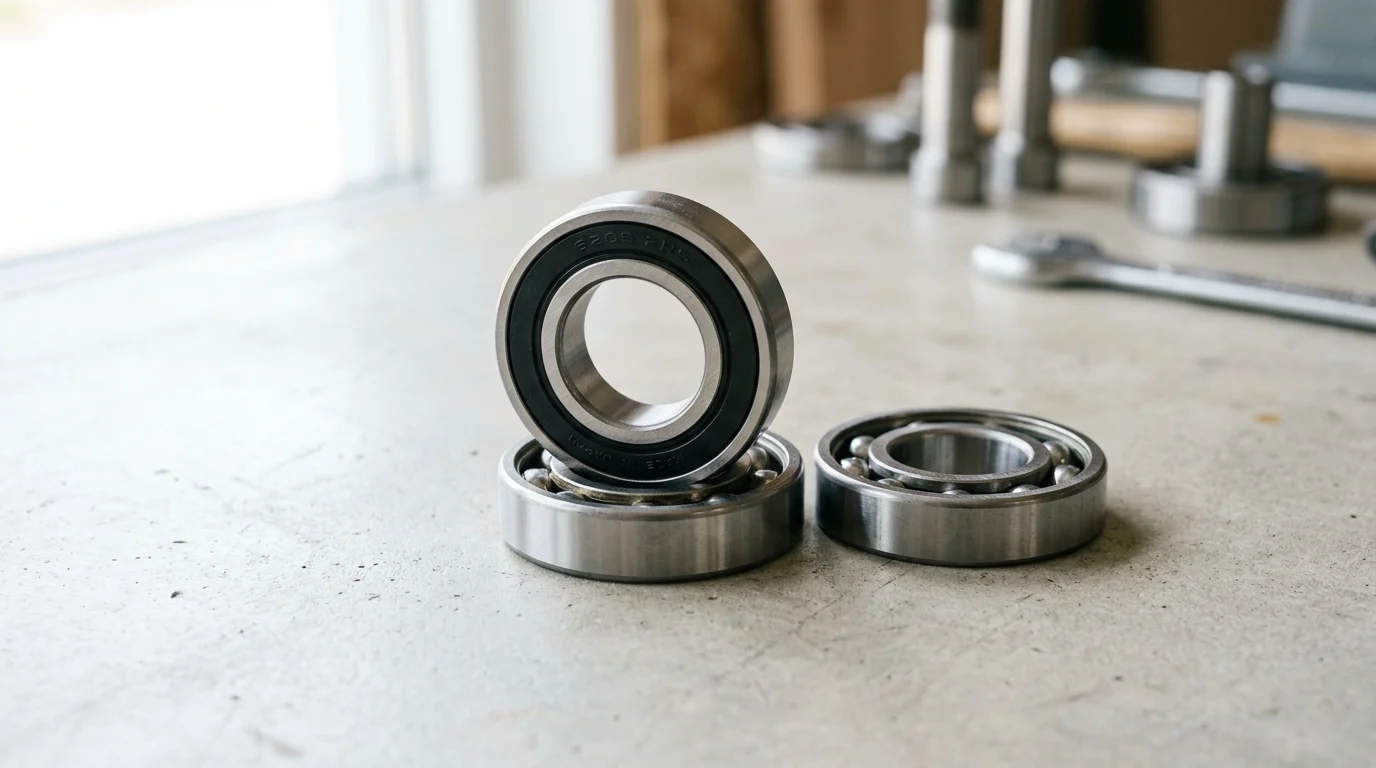
Motor bearings have an outsized impact on industrial reliability because they influence load capacity, shaft stability, vibration, heat, and energy use throughout a motor’s service life. Choosing the right type is not just a matter of fit; it requires matching bearing design, internal clearance, lubrication, sealing, speed capability, and operating environment to the demands of the application. A poor selection can shorten maintenance intervals and increase the risk of unplanned downtime, while a well-matched bearing supports smoother operation and longer equipment life. This article explains the key selection factors, common failure risks, and practical criteria that help engineers and maintenance teams make more reliable motor bearing decisions.
Why Do Motor Bearings Matter for Industrial Reliability
Electric motors drive modern industry, yet their reliability hinges on one of their smallest mechanical components: motor bearings. As the primary interface between the stationary stator housing and the rotating shaft, bearings must withstand complex radial and axial loads while minimizing friction across millions of rotational cycles.
How do motor bearings affect uptime, vibration, and energy
Bearings directly dictate the mechanical efficiency and acoustic signature of industrial motors. Excessive friction from suboptimal bearing selection or degradation can reduce overall motor efficiency by 1.5% to 3.0%, translating to thousands of dollars in wasted energy over a 100-horsepower motor’s lifecycle. Furthermore, precision bearings maintain tight shaft alignment, keeping vibration velocities below the critical 2.8 mm/s threshold (per ISO 10816 standards for continuous operation), which prevents secondary damage to couplings, seals, and driven equipment.
Which failure modes most often drive unplanned motor bearing outages
Industry data consistently shows that bearings account for approximately 51% of all electric motor failures. The most prevalent failure mode is lubrication breakdown, responsible for roughly 80% of those bearing-related outages. Other severe modes include electrical fluting—where stray shaft currents exceeding 1.5 volts arc through the thin oil film, causing micro-cratering on the raceway—and solid contamination. When these degradation mechanisms accelerate, the bearing’s theoretical L10 life (often specified at 40,000 to 100,000 hours) can collapse to mere months of actual service.
Which Motor Bearing Types and Design Factors Should Be Compared
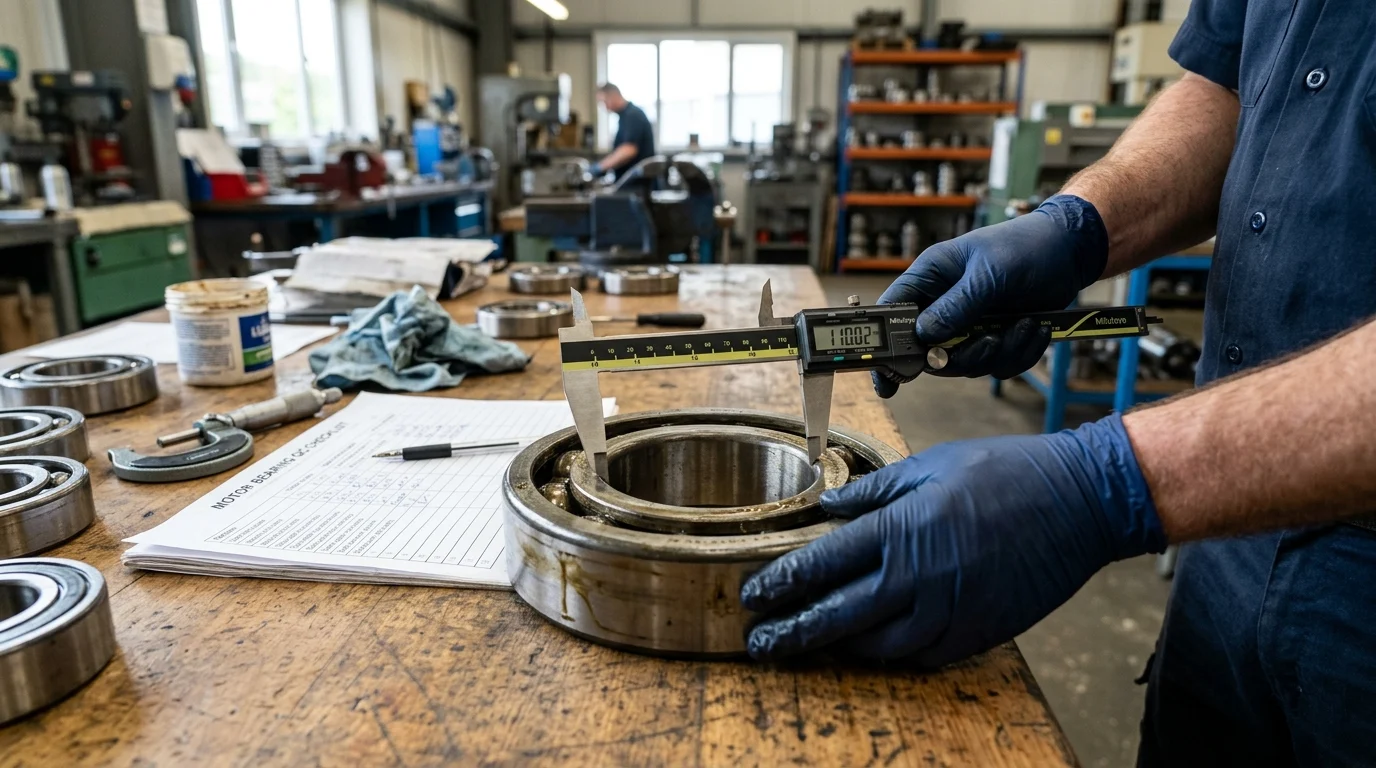
The architectural foundation of a reliable motor lies in matching the rolling element geometry to the application’s specific kinetic demands. Engineers must navigate various structural designs, each engineered to manage distinct stress vectors and speed profiles.
How do ball bearings, roller bearings, and sleeve bearings differ
Industrial motors typically rely on deep groove ball bearings, cylindrical roller bearings, or sleeve (babbitt) bearings. Deep groove ball bearings excel in handling moderate radial and axial loads at high speeds, making them the standard for motors under 500 horsepower. Cylindrical roller bearings offer up to 70% higher radial load capacity, ideal for belt-driven applications involving heavy side loads. For multi-megawatt motors operating at extreme speeds, sleeve bearings utilize a hydrodynamic oil film to eliminate metal-to-metal contact entirely.
| Bearing Type | Primary Load Handled | Speed Capacity (dn value) | Typical Motor Range |
|---|---|---|---|
| Deep Groove Ball | Moderate Radial/Axial | Up to 500,000 | Fractional to 500 HP |
| Cylindrical Roller | Heavy Radial | Up to 300,000 | 50 to 1,000+ HP (Belt Drive) |
| Sleeve (Fluid Film) | Extreme Radial | > 1,000,000 | 1,000+ HP (High Speed) |
Which specifications for motor bearings should be checked first
Beyond the basic type, specific internal tolerances dictate operational success. Internal radial clearance is a critical specification; for example, C3 clearance provides an additional 13 to 28 micrometers of radial play compared to standard (CN) bearings. This extra space accommodates the thermal expansion that occurs when the inner ring runs up to 15°C hotter than the outer ring. Additionally, precision ratings (such as ABEC 3 or ABEC 5) define runout tolerances, with higher ABEC numbers restricting eccentricity to less than 0.005 mm, thereby ensuring smoother operation and lower heat generation at high RPMs.
How Should Selection Balance Load, Speed, Environment, and Lubrication
A bearing’s theoretical dynamic load capacity means little if the operational environment degrades its materials or lubrication. Engineers must synthesize load and speed data with ambient temperatures and atmospheric contaminants to specify a survivable mechanical system.
How do operating conditions change the best motor bearings
Speed and load establish the baseline, but ambient conditions dictate the metallurgical and tribological requirements. Standard AISI 52100 bearing steel begins to lose dimensional stability when continuous operating temperatures exceed 120°C. For hotter environments, such as those near industrial furnaces, bearings must be specified with heat stabilization treatments (e.g., S1 or S2 ratings) that maintain structural integrity up to 200°C or 250°C. Similarly, applications utilizing Variable Frequency Drives (VFDs) introduce high-frequency voltage pulses; these conditions require hybrid bearings with silicon nitride ceramic rolling elements, which provide dielectric insulation up to 1,000 volts DC to halt electrical arcing.
What trade-offs exist between sealed, shielded, and relubricable bearings
The choice of closure mechanism directly impacts maintenance intervals and contamination resistance. Shielded bearings (e.g., ZZ suffixes) feature non-contact metal plates that retain grease while allowing high-speed operation (up to 10,000 RPM for small frame sizes), but they offer limited defense against fine dust or moisture ingress. Sealed bearings (e.g., 2RS) utilize elastomer lips that physically contact the inner ring, providing superior environmental protection at the cost of increased friction and a 20% to 30% reduction in maximum speed limits. Conversely, open, relubricable bearings allow maintenance teams to purge degraded grease during operation, extending the L10 life in heavy-duty applications where automated systems dispense exact volumes (e.g., 2 to 5 grams per week) to maintain optimal oil film thickness.
What Sourcing, Quality, and Compliance Factors Reduce Lifecycle Risk
The global bearing market is highly complex, and procuring high-quality components requires rigorous supply chain vetting. Sourcing decisions carry as much weight as engineering specifications when safeguarding industrial reliability.
How should buyers compare OEM, distributor, and aftermarket motor bearings
Plant managers must navigate the trade-offs between Original Equipment Manufacturers (OEMs), authorized distributors, and the broader aftermarket. OEM components guarantee exact specification matches and preserve motor warranties, but they often command a 20% to 40% price premium and longer lead times. Authorized distributors provide a reliable middle ground, offering technical support, inventory localization, and verified provenance. Procurement teams must remain exceptionally vigilant against the gray market and unauthorized aftermarket sellers; counterfeit bearings—often manufactured with inferior steel that reduces fatigue life by up to 80%—cost the global industrial sector an estimated $3 billion annually in unplanned downtime and replacement costs.
Which quality controls, documentation, and compliance checks should be verified
To mitigate sourcing risks, buyers must demand comprehensive quality documentation. Critical compliance checks include verifying ISO 9001 manufacturing certification and requesting Material Test Reports (MTRs) to confirm steel cleanliness and alloy composition. For critical-path motors (e.g., >200 HP), quality control should extend to 100% vibration and noise testing at the factory level, often documented via Anderometer readings. Bearings destined for explosive atmospheres or specialized environments must also carry relevant compliance documentation, such as ATEX certification or RoHS compliance, ensuring that the supply chain meets stringent international safety thresholds.
How Should Teams Build a Decision Process for Motor Bearings
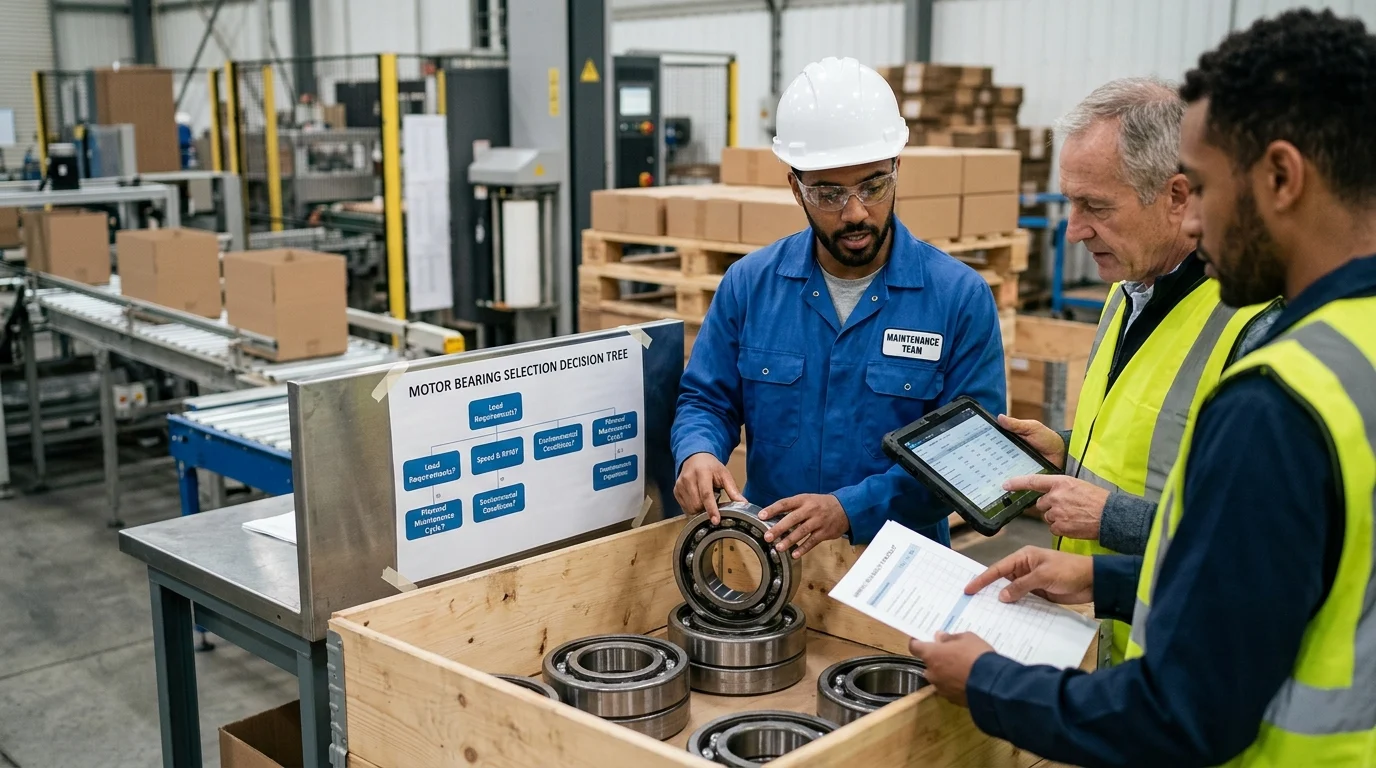
Haphazard bearing replacement inevitably leads to chronic, repeating failures. Best-in-class industrial facilities replace ad-hoc purchasing with a structured, data-driven decision process that aligns component selection with long-term asset management goals.
What step-by-step evaluation helps narrow motor bearing options
A robust evaluation process begins with a rigorous kinematic analysis, advancing through environmental checks and final clearance specifications. Engineering teams should standardize this workflow to prevent oversight during critical motor overhauls.
| Evaluation Phase | Key Actions | Critical Metrics to Verify |
|---|---|---|
| 1. Load & Kinematic Analysis | Calculate equivalent dynamic bearing load (P) | Ensure C/P ratio > 8 for adequate fatigue life |
| 2. Environmental Assessment | Map ambient temperature and contamination risks | Specify closure type (seals/shields) and grease fill (typically 30-50%) |
| 3. Electrical Vetting | Check for VFD operation and stray currents | Require ceramic elements or grounding rings if shaft voltage > 1.5V |
| 4. Tolerance & Fit Selection | Determine shaft and housing fits | Select internal clearance (e.g., C3) based on interference fits |
How should total cost of ownership and maintenance strategy be weighed
Procurement frameworks must pivot from localized purchase price to Total Cost of Ownership (TCO). A standard steel bearing might carry a unit cost of $150, while a hybrid ceramic variant costs $600. However, if the motor drives a critical production line where unplanned downtime costs $15,000 per hour, the premium bearing achieves a return on investment by preventing a single hour of VFD-induced fluting failure. Teams should integrate bearing selection with their specific maintenance maturity; facilities utilizing predictive maintenance (vibration analysis and ultrasound) can maximize the ROI of high-end bearings, while sites relying on reactive maintenance may prioritize highly sealed, maintenance-free units to offset a lack of manual relubrication protocols.
Key Takeaways
- The most important conclusions and rationale for motor bearings
- Specs, compliance, and risk checks worth validating before you commit
- Practical next steps and caveats readers can apply immediately
Frequently Asked Questions
What motor bearing type is best for high-speed industrial motors?
Deep groove ball bearings are usually best for high-speed motors because they handle moderate radial and axial loads with low friction and stable running.
When should I choose cylindrical roller bearings instead of ball bearings?
Choose cylindrical roller bearings when the motor has heavy radial load, such as belt-driven equipment, because they offer much higher load capacity.
Why is C3 clearance often recommended for motor bearings?
C3 clearance gives extra internal play for thermal expansion, helping prevent overheating and preload when the motor runs hot.
What causes most motor bearing failures in industry?
Lubrication breakdown is the main cause, followed by contamination and electrical fluting from stray shaft currents.
How can I reduce vibration and extend motor bearing life?
Match the bearing to load and speed, use the correct lubricant, keep contaminants out, and monitor vibration regularly to catch early wear.