Introduction
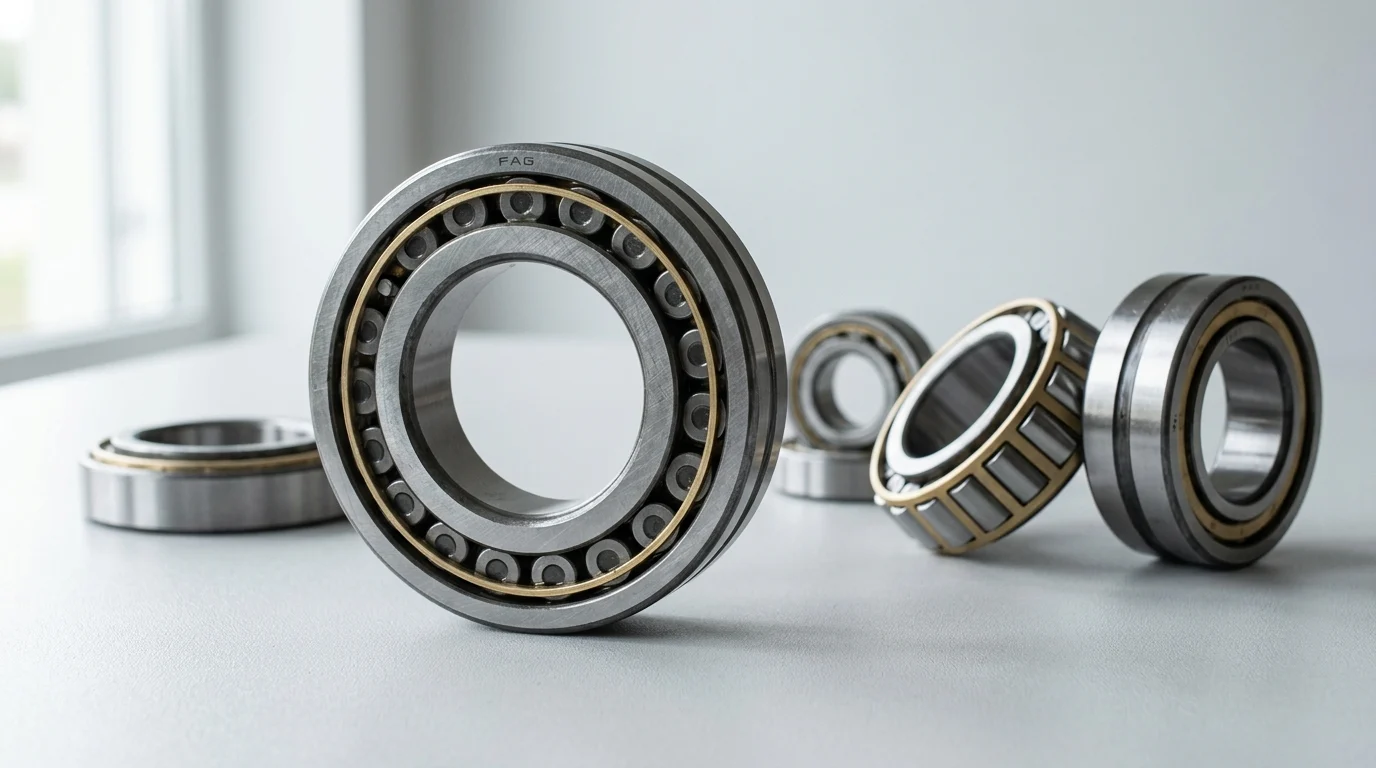
Choosing roller bearings for heavy-duty machinery starts with understanding the loads, speeds, temperatures, contamination levels, and alignment conditions the equipment will actually face. The right bearing does more than support rotation: it affects energy use, service life, maintenance intervals, and the risk of costly unplanned shutdowns. This introduction outlines the key selection factors that matter most in demanding industrial applications, including load direction, bearing type, internal clearance, lubrication, and material performance. With these basics in view, the rest of the article will help you match roller bearing specifications to real operating conditions and avoid common sizing and application mistakes.
Roller Bearing Selection Basics for Heavy-Duty Machinery
Heavy-duty machinery operates under extreme mechanical stress, demanding power transmission components capable of surviving sustained dynamic and static loads. Roller bearings serve as the critical interface between rotating and stationary components in these systems, distributing forces while minimizing frictional resistance.
Selecting the appropriate bearing architecture requires a rigorous engineering approach. A mismatched component not only degrades system efficiency but also precipitates catastrophic mechanical failures, translating directly to substantial financial losses in capital-intensive sectors like mining, steel processing, and heavy construction.
Why roller bearings affect uptime and efficiency
The correlation between bearing specification and system uptime is absolute. In heavy industrial environments, the Mean Time Between Failures (MTBF) of a machine is frequently dictated by its weakest tribological node. When a primary bearing fails in a continuous casting machine or a heavy excavator, the resulting unplanned downtime can incur costs exceeding $100,000 per hour in lost production alone.
Optimized roller bearings mitigate these risks by maintaining precise shaft alignment and managing thermal expansion under continuous operation. By reducing internal friction, high-quality bearings also lower the machine’s overall energy consumption, directly improving the operational efficiency metrics over the equipment’s lifecycle.
Which operating conditions define selection requirements
Operating conditions dictate the physical and metallurgical requirements of the bearing. Engineers must quantify radial forces, axial (thrust) forces, and complex combined loads. For instance, large-scale mining crushers routinely subject bearings to static loads exceeding 5,000 kN and severe shock loads that can instantaneously multiply nominal operating stresses.
Beyond load vectors, environmental factors such as ambient operating temperatures, ingress of abrasive particulate matter, and moisture exposure aggressively influence selection. A bearing operating in a continuous kiln at 250°C requires fundamentally different steel stabilization and cage materials than one operating in a sub-zero arctic drilling environment.
Roller Bearing Types for Heavy-Duty Applications
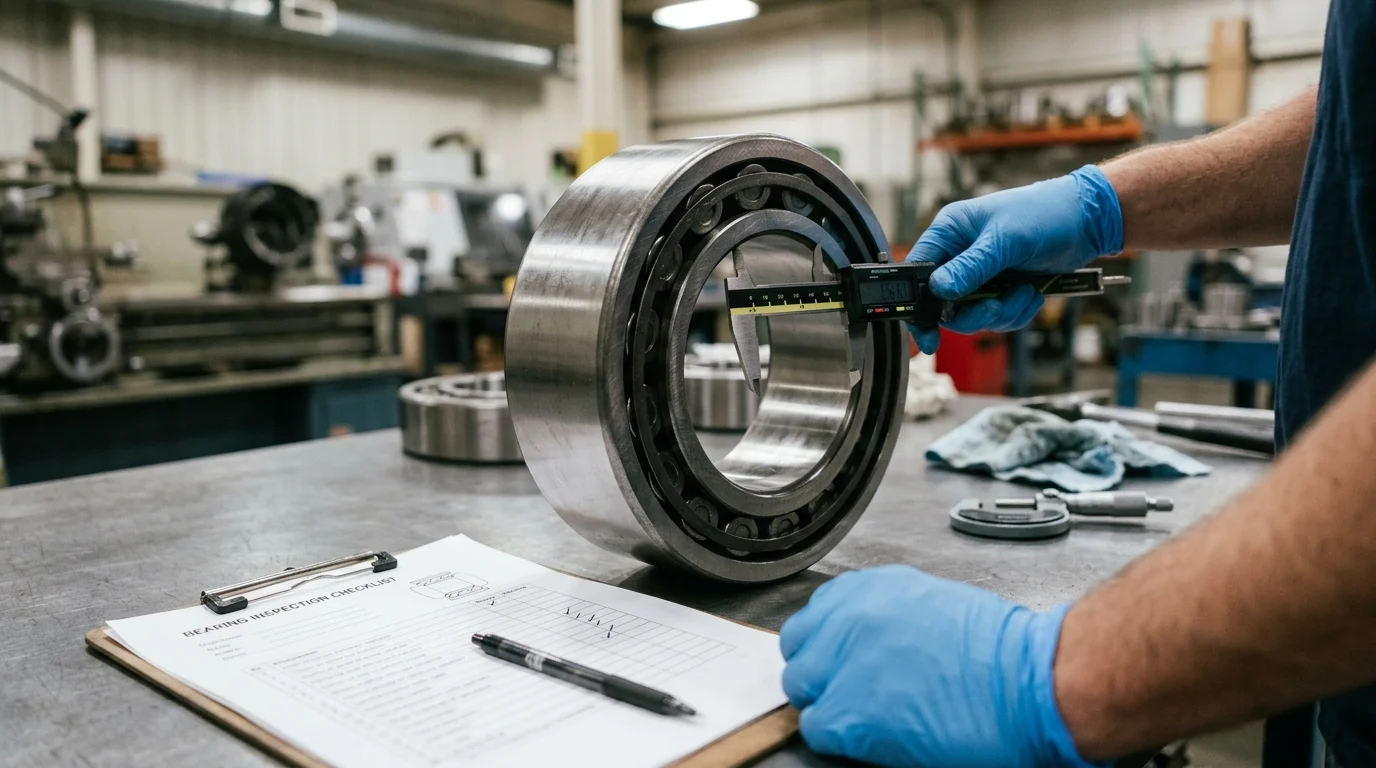
The distinct geometric profiles of rolling elements define their load-carrying capabilities and kinematic performance. Unlike ball bearings, which utilize point contact, roller bearings rely on line contact, significantly increasing their capacity to support heavy loads without undergoing plastic deformation.
How cylindrical, spherical, tapered, and needle bearings compare
The four primary roller bearing architectures each serve specific mechanical profiles. Cylindrical roller bearings excel in accommodating massive radial loads and high-speed operations due to their maximized line contact and low-friction kinematics. In contrast, spherical roller bearings feature a self-aligning design capable of tolerating shaft deflections and misalignments up to 2.5 degrees, making them indispensable in vibrating screens and heavy conveyors.
Tapered roller bearings utilize conical rollers to simultaneously manage severe radial and axial loads, and are commonly deployed in gearboxes and wheel hubs where thrust forces are prominent. Needle roller bearings, characterized by a high length-to-diameter ratio, provide substantial load capacity within a highly restricted radial envelope.
| Bearing Type | Primary Load Capacity | Misalignment Tolerance | Typical Heavy Application |
|---|---|---|---|
| Cylindrical | Exceptionally high radial | Very low (< 0.1°) | Large electric motors, rolling mills |
| Spherical | High radial, moderate axial | High (1.5° to 2.5°) | Crushers, continuous casting |
| Tapered | High combined (radial + axial) | Low (< 0.1°) | Heavy-duty gearboxes, axles |
| Needle | High radial (compact envelope) | Very low | Planetary gears, universal joints |
Which design features matter most
Beyond the rolling element geometry, internal design features drastically alter performance parameters. Cage design is critical; while stamped steel cages suffice for standard operations, heavy-duty applications frequently necessitate machined brass or polymer (polyamide) cages to withstand high vibration and sudden accelerations without fracturing.
Internal clearance is another vital specification. Bearings operating under heavy press fits or significant temperature gradients require larger radial internal clearances, designated as C3 or C4, to prevent premature binding as the inner ring expands thermally during operation.
How to evaluate bearing options
Evaluating bearing options requires overlaying the application’s kinetic profile against manufacturer load ratings. Engineers must assess the limiting speed, which dictates the maximum rotational velocity before thermal equilibrium is compromised. In heavy machinery, this often requires balancing the need for load-carrying mass against the heat generated by rolling friction.
Furthermore, evaluating the metallurgical purity of the bearing steel—such as vacuum-degassed high-carbon chromium steel—is essential. Higher purity reduces non-metallic inclusions, thereby delaying subsurface fatigue spalling and extending the operational limits of the component.
Key Technical Specifications
Translating application requirements into specific, procurable components relies on standardized technical specifications. Organizations such as ISO and ABMA provide the mathematical frameworks necessary to predict bearing performance, ensuring that selected components meet the rigorous demands of heavy industrial machinery.
How to assess load ratings and duty cycle
The foundational metric for bearing selection is the L10 life calculation, representing the number of operating hours (or millions of revolutions) that 90% of a group of identical bearings will complete before evidence of metal fatigue appears. This calculation relies heavily on the Dynamic Load Rating (C), which quantifies the constant load a bearing can endure for one million revolutions.
For heavy machinery subject to stationary loads or slow oscillations, the Static Load Rating (C0) is equally critical. Exceeding C0 leads to permanent plastic deformation of the raceways—known as brinelling. Engineers typically apply a static safety factor (s0) ranging from 1.5 to 3.0 for heavy shock applications to ensure structural integrity under peak intermittent forces.
How lubrication, temperature, and sealing affect performance
Lubrication regime and thermal management dictate the practical limits of bearing endurance. The choice between grease and oil bath lubrication alters the bearing’s thermal dissipation capacity. Grease is standard for speeds up to 1,500 RPM in large bores, while higher speeds necessitate circulating oil to remove heat and flush away micro-debris.
Temperature requirements dictate steel stabilization protocols. Standard bearings are typically dimensionally stable up to 120°C. For heavy-duty applications exceeding this, specifiers must mandate S0 (150°C), S1 (200°C), or S2 (250°C) stabilization classes. Additionally, integral sealing solutions, such as labyrinth seals or heavy-duty nitrile rubber (NBR) 2RS seals, are mandatory to prevent the ingress of silicates and water in mining or agricultural environments.
Which sizing and validation steps confirm fit
Validation of the bearing fit is the final engineering hurdle. Even the highest-rated roller bearing will fail prematurely if mounted with improper shaft and housing tolerances. Heavy loads generally require interference fits on the rotating ring to prevent fretting corrosion and creep.
Specifiers routinely utilize standardized ISO tolerance classes, such as m6 or p6 for shafts and H7 or J7 for housings, depending on the load magnitude and bearing size. Proper validation includes calculating the resulting loss of internal clearance post-mounting to ensure the bearing retains its targeted operational clearance at steady-state temperatures.
Supplier Evaluation and Sourcing
Procurement in the heavy machinery sector extends beyond technical specifications to encompass rigorous supplier validation and supply chain security. The commercial viability of a heavy-duty asset depends heavily on the consistent quality and availability of its critical replacement parts.
Which quality standards and indicators matter
Quality assurance in bearing manufacturing is strictly quantified. Buyers must demand adherence to ISO 9001 and IATF 16949 standards to ensure manufacturing consistency. Tolerance classes, defined by ISO (e.g., Class 0, Class 6) or ABEC standards, dictate the dimensional precision of the bearing. While standard industrial applications utilize ISO Class 0 (ABEC 1), high-precision gearboxes may require Class 6 (ABEC 3).
Furthermore, top-tier industrial buyers evaluate suppliers based on defect rates, targeting fewer than 50 Parts Per Million (PPM). Metallurgical certifications, verifying steel cleanliness and hardness (typically 58-64 HRC), should be mandatory inclusions in the Quality Assurance (QA) documentation package.
How to compare OEMs, distributors, and manufacturers
Purchasing agents must navigate the trade-offs between direct OEM sourcing, authorized distributors, and aftermarket manufacturers. Direct OEM relationships offer maximum engineering support and guaranteed authenticity, which is critical given the proliferation of counterfeit bearings in global markets.
Distributors provide localized inventory and multi-brand consolidation but may add margin layers. Evaluating these channels requires analyzing their technical support capabilities, warranty terms, and willingness to hold strategic buffer stock for critical heavy-duty components.
| Sourcing Channel | Primary Advantage | Primary Limitation | Typical MOQ | Standard Lead Time |
|---|---|---|---|---|
| Tier 1 OEM Direct | Unmatched quality & engineering | Premium pricing | High (500+ units) | 12–24 weeks |
| Authorized Distributor | Local stock, rapid delivery | Higher unit cost | Low (1–10 units) | 1–3 weeks |
| Tier 2/3 Manufacturer | Significant cost savings | Variable metallurgical quality | Medium (100+ units) | 8–16 weeks |
Which sourcing and logistics factors affect availability
Logistics factors profoundly impact machine uptime. Standard catalog bearings might boast lead times of 2 to 4 weeks, but custom large-bore spherical roller bearings required for specialized crushers or marine drives can easily stretch to 16 to 24 weeks.
Buyers must establish robust Vendor Managed Inventory (VMI) programs or localized stocking agreements to mitigate these extended lead times. Factoring in geopolitical risks, raw material (steel) availability, and freight reliability is now a mandatory component of the strategic sourcing process for heavy machinery components.
Decision Framework for Buyers

Establishing a standardized procurement framework ensures that engineering requirements and commercial realities are continuously aligned. A structured decision-making process shields organizations from the hidden costs of sub-optimal component selection.
Which selection process aligns bearings with application needs
An effective selection process follows a linear, rigorous progression. It begins with a comprehensive load and kinematic analysis, followed by an environmental audit to define sealing and metallurgical requirements. Once the technical envelope is established, buyers cross-reference these demands against standardized bearing catalogs to identify viable candidates.
The final phase of this framework involves lifecycle calculations and prototype validation. By simulating the operating environment, engineers can accurately predict L10 life and establish baseline maintenance intervals, ensuring the selected bearing natively supports the overarching operational goals of the machinery.
How to balance purchase cost against downtime risk
The ultimate procurement decision rests on a Total Cost of Ownership (TCO) analysis, balancing initial acquisition costs against the severe financial penalties of unplanned downtime. While a premium tier-one roller bearing may carry a 30% to 50% upfront price premium over a tier-two alternative, its superior metallurgical purity and optimized geometry frequently double the operational lifespan.
In heavy-duty applications where a single bearing replacement requires extensive labor, crane rentals, and days of lost production, the premium component routinely generates a net-positive Return on Investment (ROI) within the first 12 months. Buyers must shift the procurement focus from unit price to lifecycle cost per operating hour to maximize overall asset profitability.
Key Takeaways
- The most important conclusions and rationale for roller bearings
- Specs, compliance, and risk checks worth validating before you commit
- Practical next steps and caveats readers can apply immediately
Frequently Asked Questions
Which roller bearing type is best for heavy-duty machinery?
Match the load and alignment needs: cylindrical for very high radial loads, spherical for misalignment and shock, tapered for combined radial and axial loads, and needle when space is tight.
How do I choose the right internal clearance for roller bearings?
Use C3 or C4 when heavy press fits, high loads, or temperature rise may reduce clearance. Confirm the fit, shaft size, and operating temperature before ordering.
When should I use spherical roller bearings instead of cylindrical ones?
Choose spherical rollers if the shaft may deflect or housing alignment is difficult. Use cylindrical rollers when alignment is precise and maximum radial load capacity and speed are priorities.
What operating conditions matter most when selecting roller bearings?
Check radial and axial loads, shock levels, speed, temperature, contamination, moisture, and alignment. These factors determine the bearing type, material, cage, sealing, and lubrication method.
Can DEMY Bearings help OEMs or distributors choose the correct roller bearing?
Yes. DEMY’s catalog-driven range covers cylindrical, spherical, tapered, and needle bearings, and its technical resources can help match bearing type and specification to heavy-duty equipment needs.