Introduction
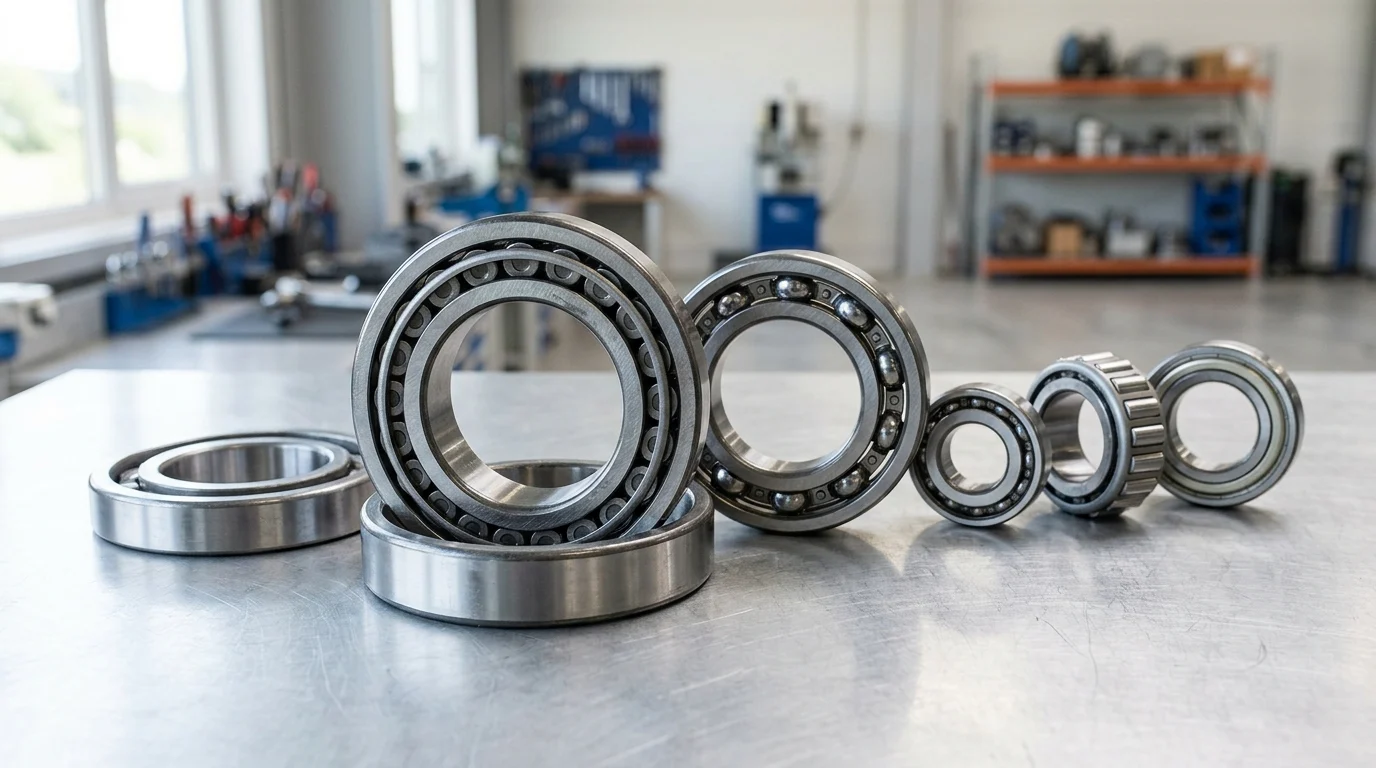
Selecting industrial bearings for heavy machinery is a design decision that directly affects uptime, maintenance cost, and failure risk. Bearings in crushers, mills, conveyors, and similar equipment must handle high radial and axial loads, shock events, misalignment, contamination, and demanding duty cycles without losing precision or service life. This guide explains the key factors behind a sound selection process, including load profile, operating speed, lubrication needs, internal clearance, mounting conditions, and environmental exposure. By understanding how these variables interact, readers can compare bearing types more effectively, avoid common specification errors, and choose components that match real operating conditions rather than nominal catalog values.
Why industrial bearing selection determines heavy machinery uptime
The reliability of heavy machinery, ranging from mining crushers to steel mill rolling stands, is inextricably linked to the performance of its industrial bearings. As the critical interface between stationary structures and rotating shafts, bearings must transmit immense power while minimizing friction and accommodating structural deflections. When specified correctly, these components operate seamlessly within their engineered lifecycle. However, improper selection accelerates wear mechanisms, leading to catastrophic equipment failure.
Industrial bearing selection directly dictates Overall Equipment Effectiveness (OEE). Engineering data indicates that OEE can drop by 15% to 20% when bearing vibration exceeds the ISO 10816-3 thresholds for heavy industrial machines. Consequently, maintenance and reliability engineers must approach bearing specification not as a routine commodity purchase, but as a foundational mechanical design decision.
Load profile, duty cycle, and environment
Heavy machinery rarely operates under steady-state conditions. The load profile typically consists of complex multi-directional forces, including heavy radial loads from gear drives and fluctuating axial loads from thrust applications. Engineers must quantify the equivalent dynamic bearing load, factoring in peak shock loads that can momentarily exceed nominal operating conditions by 300% or more.
Duty cycle and environmental conditions further complicate the load profile. A machine operating continuously (24/7) requires a vastly different fatigue life calculation than one operating intermittently. Furthermore, environmental extremes—such as ambient temperatures exceeding 80°C, abrasive silica dust in aggregate processing, or highly corrosive washdown environments—dictate specific requirements for bearing metallurgy, sealing architectures, and lubrication viscosity.
Failure costs and downtime impact
When a critical bearing fails, the financial repercussions extend far beyond the cost of the replacement component. Secondary damage to shafts, housings, and adjacent gearing can multiply the repair bill exponentially. However, the most severe financial penalty is typically the loss of production.
In continuous process industries like pulp and paper or petrochemical refining, unplanned downtime can exceed $100,000 per hour. If a specialized, large-bore bearing fails without a spare in inventory, a 48-hour shutdown can result in millions of dollars in lost revenue. This severe downtime impact justifies the upfront capital expenditure for premium bearings, advanced condition-monitoring sensors, and rigorous specification protocols.
Industrial bearing types for heavy machinery
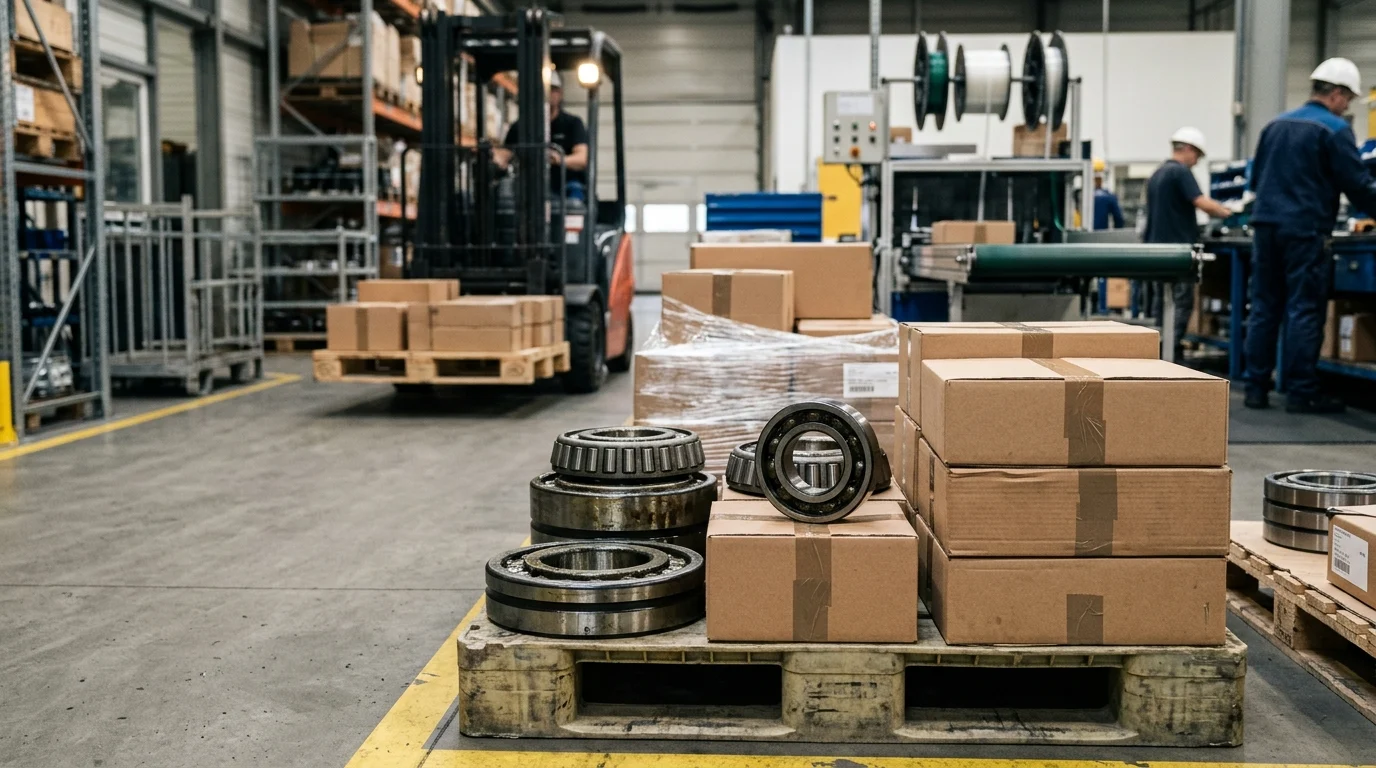
Selecting the correct bearing architecture requires a deep understanding of rolling-element and plain bearing kinematics. No single bearing type is universally applicable across heavy machinery; each design offers specific advantages regarding load capacity, speed limitations, and tolerance for shaft deflection.
Ball, cylindrical roller, spherical roller, and tapered roller bearings
Rolling-element bearings are categorized by their rolling members, which dictate their load-carrying capabilities. Deep groove ball bearings are ubiquitous for high-speed, light-to-medium load applications, but they frequently lack the capacity for heavy industrial demands. Cylindrical roller bearings offer exceptionally high radial load capacity due to their line contact, making them ideal for large electric motors and gearboxes.
For applications involving heavy combined loads (both radial and axial), tapered roller bearings are the industry standard, often arranged in back-to-back or face-to-face configurations to manage bidirectional thrust. Spherical roller bearings are particularly vital in heavy machinery because their self-aligning geometry can accommodate shaft misalignment and housing deflections of up to 2 degrees without inducing edge-loading stresses.
Plain bearings, mounted units, and split bearings
In applications subject to extreme shock loads or low-speed oscillation, plain bearings (journal bearings) often outperform rolling-element designs. Operating on a hydrodynamic film of oil, plain bearings can theoretically achieve infinite life if the fluid film is maintained, supporting massive loads in equipment like hydroelectric turbines and large stamping presses.
Mounted units (pillow blocks and flange bearings) simplify installation by combining the bearing, housing, and seals into a single pre-lubricated unit. When accessibility is severely restricted, split bearings offer a massive maintenance advantage. By allowing the bearing to be assembled radially around the shaft without removing adjacent drive components, split spherical roller bearings can reduce replacement time by up to 70%, turning a two-day shutdown into a single-shift repair.
Comparison criteria by load, speed, and misalignment
Engineers must evaluate bearing types against primary operational parameters: load magnitude, rotational speed, and permissible misalignment. Trade-offs are inevitable; a bearing designed for maximum radial stiffness will generally have a lower tolerance for angular misalignment.
| Bearing Type | Primary Load Capacity | Relative Speed Limit | Misalignment Tolerance |
|---|---|---|---|
| Deep Groove Ball | Radial & Light Axial | Very High | Low (< 0.25°) |
| Cylindrical Roller | High Radial | High | Very Low (< 0.1°) |
| Tapered Roller | High Radial & Axial | Medium | Low (< 0.1°) |
| Spherical Roller | Very High Radial | Low to Medium | High (1.5° – 2.0°) |
| Plain/Journal | Extreme Radial | Variable (Film Dep.) | Medium (Spherical Plain) |
Using comparative matrices ensures that the selected bearing geometry aligns with the dominant failure modes of the specific application, whether that is fatigue spalling, thermal degradation, or structural overload.
How to specify industrial bearings
Specification translates mechanical demands into precise component parameters. Relying on dimensional interchangeability alone is insufficient for heavy machinery. Engineers must utilize established standards, such as ISO 281 for dynamic load ratings and life calculations, to ensure the bearing will survive its intended design life.
Dynamic and static load ratings
Calculating the required bearing size relies on the dynamic load rating (C) and the static load rating (C0). The dynamic load rating is used to calculate the basic rating life (L10), which represents the number of operating hours that 90% of a group of identical bearings will exceed before the first evidence of metal fatigue occurs.
The static load rating (C0) becomes critical in slow-moving or stationary applications subjected to heavy shock loads. To prevent permanent plastic deformation of the raceways (brinelling), engineers apply a static safety factor (s0). For smooth, vibration-free operations, an s0 of 1.0 may suffice. However, for heavy crushers or excavators, the specification must demand an s0 ranging from 1.5 to 3.0 to withstand severe impact forces.
Lubrication, contamination control, and temperature limits
Tribology and environmental sealing dictate the actual service life of the bearing, which often falls short of the calculated L10 fatigue life due to contamination or lubrication failure. The specification must define the lubrication method (grease vs. circulating oil) and the required base oil viscosity at the operating temperature (kappa value).
Temperature limits heavily influence bearing material specification. Standard through-hardened 100Cr6 bearing steel is dimensionally stable up to approximately 120°C. If the application exceeds this threshold, the specification must call for heat-stabilized rings (e.g., S1 or S2 designations) capable of withstanding 200°C to 250°C without undergoing metallurgical phase transformations that alter dimensional tolerances.
Step-by-step bearing selection process
A rigorous specification process follows a defined engineering sequence to eliminate guesswork and ensure all variables are accounted for.
First, engineers define the boundary conditions, including minimum and maximum loads, speed profiles, and ambient temperatures. Second, the appropriate bearing type and size are selected based on the L10h life calculation. Third, the internal clearance is specified; heavy interference fits or high operating temperatures often require bearings with C3 or C4 radial internal clearance to prevent catastrophic preloading during thermal expansion. Finally, the cage material (machined brass, stamped steel, or polyamide) and sealing arrangements are finalized based on rotational speed and contamination risks.
Sourcing, quality, and compliance factors
Securing high-quality industrial bearings requires stringent supply chain oversight. Even the most perfectly engineered specification will fail if the procured component is manufactured with sub-standard steel or inaccurate grinding tolerances. Procurement teams must navigate a complex global market where the risks of counterfeit products and material inconsistencies are high.
OEM vs aftermarket vs private-label bearings
Procurement teams frequently navigate the trade-offs between Tier 1 Original Equipment Manufacturers (OEMs), aftermarket brands, and private-label bearings. Premium Tier 1 bearings command a higher initial purchase price but provide 100% material traceability, superior surface finishes, and optimized internal geometries that maximize fatigue life.
Aftermarket and lower-tier alternatives can offer immediate cost savings of 20% to 40%. While these may be suitable for non-critical, easily accessible applications (like standard conveyor idlers), utilizing them in critical path heavy machinery introduces significant risk. The variance in steel cleanliness and heat treatment consistency in lower-tier bearings often leads to unpredictable failure curves.
Standards, certifications, and documentation
Compliance with international standards ensures dimensional interchangeability and predictable performance. Procurement documents must specify adherence to ISO, DIN, or ABMA standards for boundary dimensions and running accuracies (e.g., ISO normal, P6, or P5 tolerance classes).
For highly critical applications, buyers should mandate comprehensive documentation. This includes EN 10204 Type 3.1 material inspection certificates to verify steel composition and cleanliness, as well as factory acceptance test (FAT) data for large-bore custom bearings. Ensuring the supplier maintains ISO 9001 quality management certification is the baseline requirement for mitigating manufacturing defects.
Supply chain and procurement risks
The global supply chain for heavy industrial bearings is susceptible to raw material shortages, geopolitical tariffs, and logistical bottlenecks. Lead times for standard bearings may be a few days, but specialized large-bore bearings (exceeding 500mm in outer diameter) can carry lead times ranging from 12 to 36 weeks.
To mitigate these procurement risks, industrial facilities must implement strategic inventory management. This includes identifying critical spares, utilizing vendor-managed inventory (VMI) or consignment stock agreements, and establishing direct relationships with authorized distributors to eliminate the risk of gray-market or counterfeit bearings entering the facility.
Making the final bearing selection decision
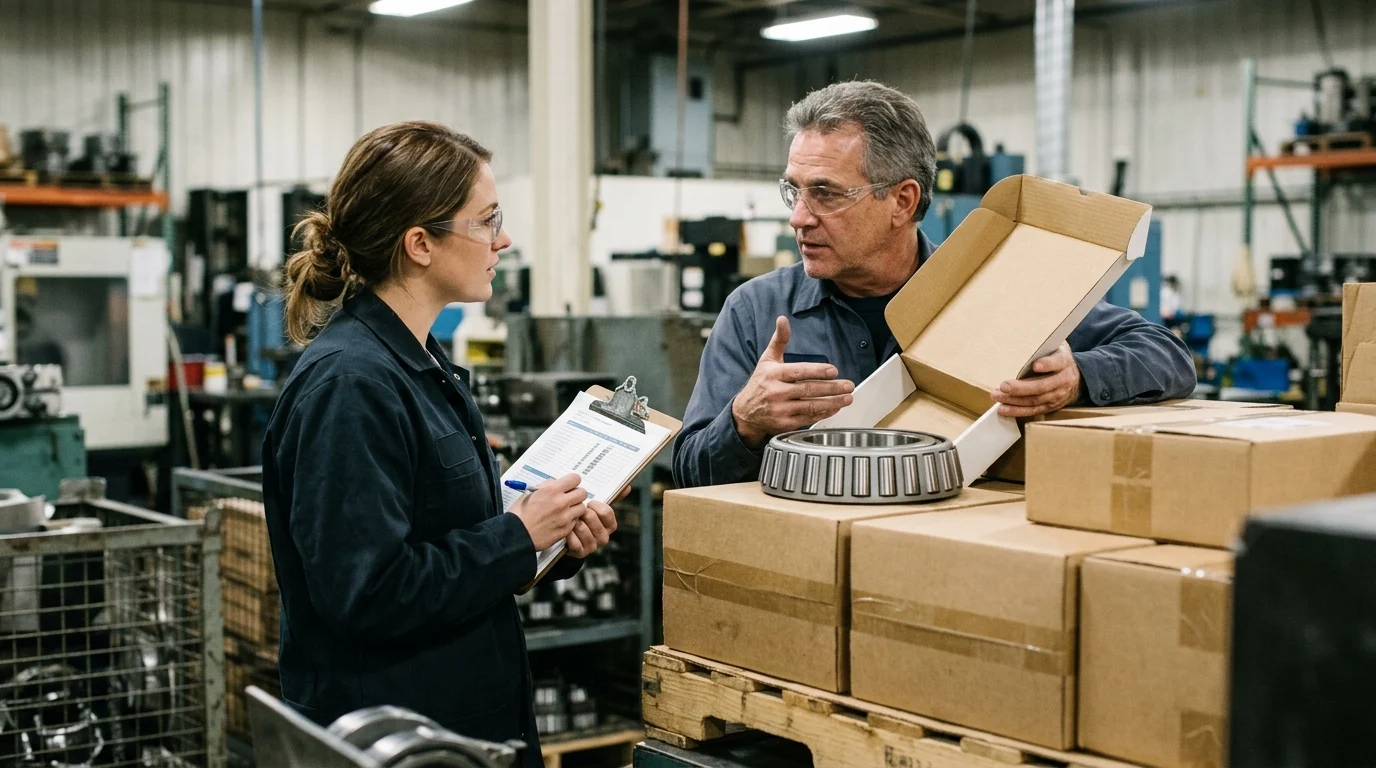
The ultimate bearing selection requires synthesizing engineering parameters with enterprise financial objectives. Making a decision based solely on the lowest initial purchase price frequently results in elevated maintenance costs and unacceptable downtime. A holistic approach evaluates the bearing as a long-term asset rather than a disposable consumable.
Decision matrix for performance and lifecycle cost
A Total Cost of Ownership (TCO) approach transforms the selection process from a simple price comparison into a lifecycle cost analysis. TCO accounts for the initial purchase price, installation labor, lubrication costs, energy consumption (friction losses), and the statistical probability of downtime over a defined period, typically 5 to 10 years for heavy machinery.
| Cost Category | Standard Bearing (Tier 3) | Premium Bearing (Tier 1) | Financial Impact (5-Year Lifecycle) |
|---|---|---|---|
| Initial Purchase Price | $1,500 | $2,800 | Premium requires $1,300 higher Capex. |
| Annual Lubrication & Labor | $600 | $400 | Premium optimized seals save $1,000. |
| Energy/Friction Costs | Base | Base – 5% | Premium saves approx. $800 in power. |
| Expected Replacements | 2 | 0 | Standard incurs $3,000 extra part costs. |
| Unplanned Downtime Risk | High ($50,000 est.) | Low ($5,000 est.) | Premium mitigates $45,000 in risk. |
| Total Estimated TCO | $56,300 | $10,200 | Premium yields superior ROI. |
By utilizing a decision matrix like the one above, reliability engineers can mathematically justify the procurement of higher-quality components to plant management, proving that a higher initial investment dramatically reduces the total lifecycle cost.
Final selection guidelines
Finalizing the specification demands a comprehensive review of both the component and its integration into the machine system. Engineers must verify that the chosen bearing type aligns with the shaft machining tolerances and housing fits. An incorrect shaft fit (e.g., too loose) can cause fretting corrosion, while an overly tight fit will eliminate internal clearance and cause rapid thermal seizure.
Furthermore, modern final selection guidelines strongly recommend integrating condition monitoring technologies. Specifying bearings with pre-machined sensor mounting pads or built-in accelerometers allows for continuous vibration and temperature tracking. By finalizing the selection with both advanced metallurgy and predictive maintenance capabilities, industrial operators can confidently maximize heavy machinery uptime and secure long-term operational profitability.
Key Takeaways
- The most important conclusions and rationale for industrial bearings
- Specs, compliance, and risk checks worth validating before you commit
- Practical next steps and caveats readers can apply immediately
Frequently Asked Questions
Which bearing type is best for heavy radial loads in machinery?
Cylindrical roller bearings are usually preferred for very high radial loads in motors, gearboxes, and heavy equipment. They provide strong line contact and good stiffness.
When should I choose spherical roller bearings?
Use spherical roller bearings when heavy loads and shaft or housing misalignment are both present. They suit crushers, conveyors, and vibrating industrial equipment.
How do I select a bearing for combined radial and axial loads?
Tapered roller bearings are a common choice for combined loads. For bidirectional thrust, engineers often use paired arrangements such as back-to-back or face-to-face.
What site resources can help me find the right industrial bearing?
On DEMY Bearings, start with the e-catalog to compare bearing types and sizes, then check the FAQ or videos for application guidance before requesting support.
Why buy industrial bearings from an ISO/TS16949-certified supplier?
Certification helps indicate controlled manufacturing and quality processes. For heavy machinery, this supports more consistent precision, reliability, and service life across production batches.