Vibration Analysis for Bearings: A Beginner’s Guide to Early Fault Detection
Modern industrial maintenance is rapidly shifting from reactive repairs to predictive strategies. Among all condition monitoring methods, vibration analysis stands out as a key technology enabling this transition. By continuously monitoring vibration signals, engineers can identify early-stage bearing faults long before they lead to unexpected shutdowns. This approach transforms traditional planned maintenance into data-driven decision-making and helps reduce downtime, maintenance costs, and secondary equipment damage.
Why Vibration Matters in Bearing Health
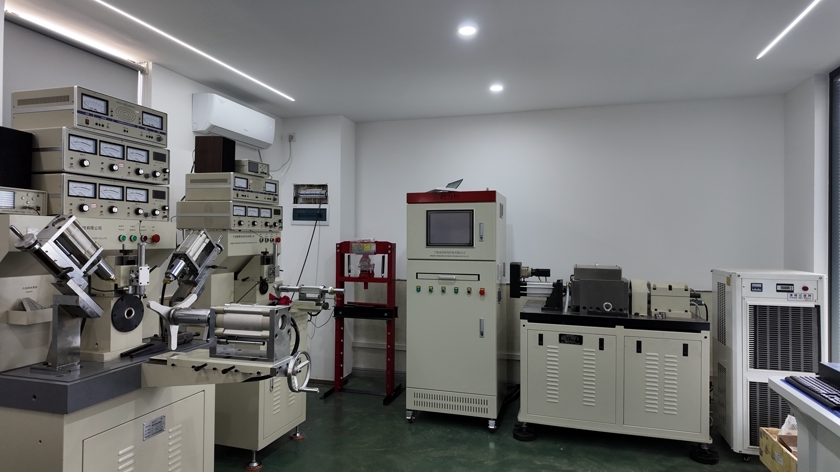
Every rotating bearing generates vibration during operation, even under normal conditions. What matters is how that vibration changes over time. An increase in vibration amplitude or the appearance of abnormal frequency patterns often indicates developing faults. Compared with temperature or noise monitoring, vibration data provides earlier and more precise insight into internal bearing conditions, making it a cornerstone of predictive maintenance programs.
Basic Concepts: Frequency, Amplitude, and Bearing Geometry
To understand vibration analysis, beginners must grasp two core parameters: frequency and amplitude. Frequency represents how often vibration occurs, while amplitude reflects its intensity. Each bearing has characteristic frequencies determined by its geometry, such as ball count, pitch diameter, and contact angle. When a defect develops, it excites specific frequencies linked directly to these dimensions, allowing engineers to pinpoint fault locations accurately.
Common Bearing Faults and Their Vibration Signatures
Different bearing defects generate distinct vibration patterns. An outer ring defect typically produces a stable frequency pattern because the fault remains stationary relative to the load zone. An inner ring defect generates fluctuating frequencies due to shaft rotation. Rolling element defects often create modulated signals, while cage failures produce low-frequency, irregular vibration. Recognizing these patterns enables early fault identification and targeted maintenance actions.
Practical Steps for Getting Started with Vibration Analysis
Implementing vibration analysis does not require advanced systems at the beginning. Start by selecting consistent measurement points near bearing housings and recording baseline data under normal operating conditions. Trend vibration values over time and establish alarm thresholds based on increases from baseline levels rather than absolute values. Even simple handheld analyzers can deliver valuable insights when used systematically.
How DEMY Bearings Support Low-Vibration Operation
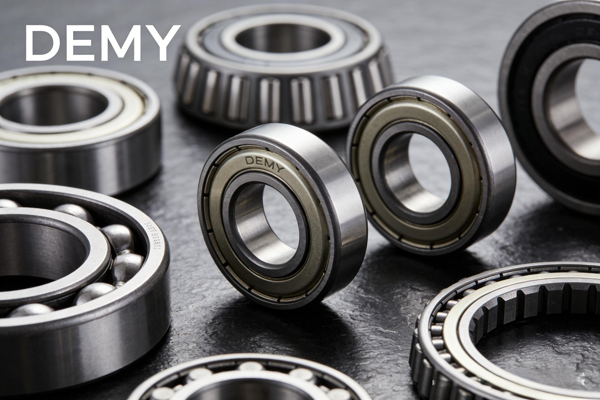
While monitoring technology is essential, bearing quality remains the foundation of reliable operation. DEMY bearings are manufactured with high-precision raceways, controlled internal clearances, and strict balance standards, all of which contribute to stable, low-vibration performance. This manufacturing accuracy not only extends bearing life but also improves the effectiveness of vibration analysis by reducing background noise and making fault signals easier to detect.
Conclusion: From Detection to Prevention
Vibration analysis empowers maintenance teams to detect bearing issues early, plan interventions efficiently, and avoid catastrophic failures. By combining condition monitoring techniques with high-quality bearings, companies can significantly enhance equipment reliability and operational efficiency. Investing in advanced maintenance strategies and precision-engineered bearings is a long-term commitment to safer, smarter, and more sustainable industrial operations.